Exceeds the Maximum Upload Size for This Site Godaddy Wordpress
A low WordPress upload size limit stops you from uploading large files, plugins, and themes. If you're building a media-heavy website, that tin can be a considerable obstacle. It'south necessary to increase the max upload size in WordPress or your server (or both) in such cases.
Depending on your hosting provider and server, in that location are many means to get about solving this issue. Nosotros'll encompass them all in this article and evidence you how to increase the maximum upload size in WordPress quickly.
Allow's dive in!
Prefer to watch the video version?
What Is the Maximum Upload Size in WordPress?
Uploading large files to a server consumes a lot of the server's resources. To prevent users from causing server timeouts, the default maximum upload size in WordPress typically ranges from 4 MB to 128 MB. Usually, the hosting provider sets this limit at the server level.
WordPress likewise includes constants that ascertain this limit, only they cannot override the server-level settings in most cases.
To verify this, get to your WordPress site's Media Library. Here, try to upload a file that crosses this maximum upload file size limit. You'll run across an fault message that looks something like this:
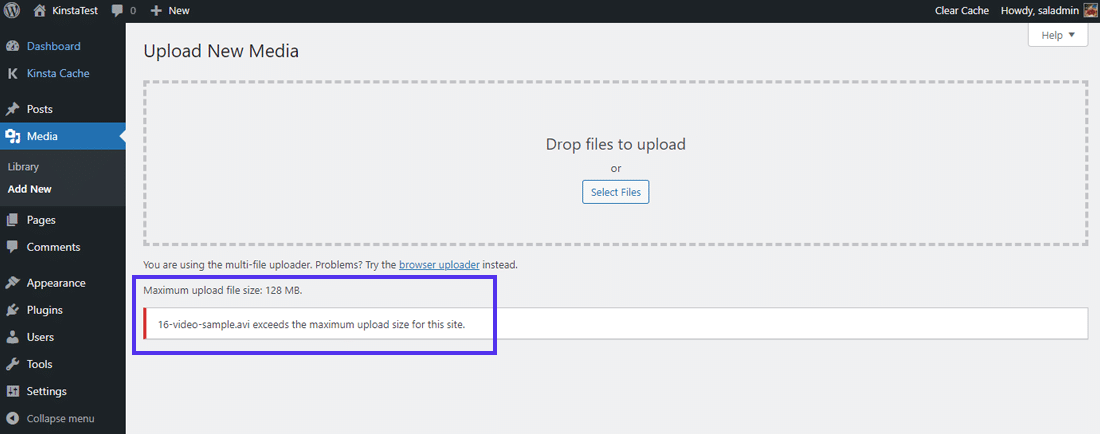
The "exceeds the maximum upload size for this site" error can be frustrating, but information technology exists for ii main reasons: security and efficiency. It hinders site owners and other users, including malicious actors, from uploading huge files (e.g. high-resolution images, large videos).
Otherwise, it can result in incapacitating your website's server, making your site come up to a crawl. Or worse, information technology can bring your site down altogether!
How to Check the Current Maximum Upload Size in WordPress
There are many ways to cheque your WordPress site's current max upload size. Let's go through all of them.
In the Media Library
The quickest way to check your site's current maximum upload size is to go to your WordPress dashboard, and from in that location, get to Media > Library. Hither, click on the Add New button to activate the media uploader tool.
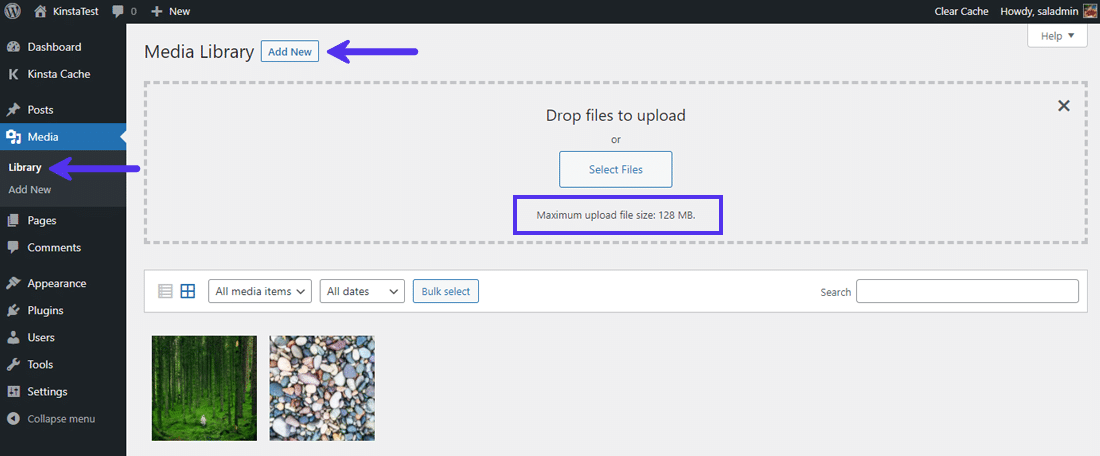
As Kinsta hosts this site, the Maximum upload file size: 128 MB. bulletin displays below the Select Files button. If you're using a different spider web hosting provider, you may come across a dissimilar limit listed here.
Yous tin can also go to Media > Add New directly and see the same bulletin displayed at the bottom.
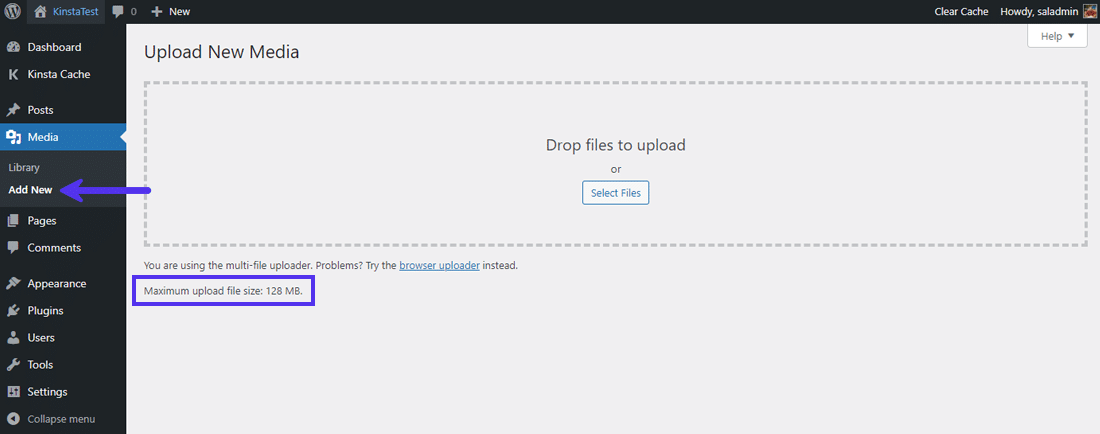
Again, you can see the 128 MB max upload file size hither.
In the Site Health Info
WordPress 5.2 added the Site Wellness Info tool to help y'all debug your WordPress site meliorate. Here, you lot tin detect almost all the information about your server and WordPress configuration.
As both the server and WordPress handle the max upload file size, there are two ways to notice its value on this screen.
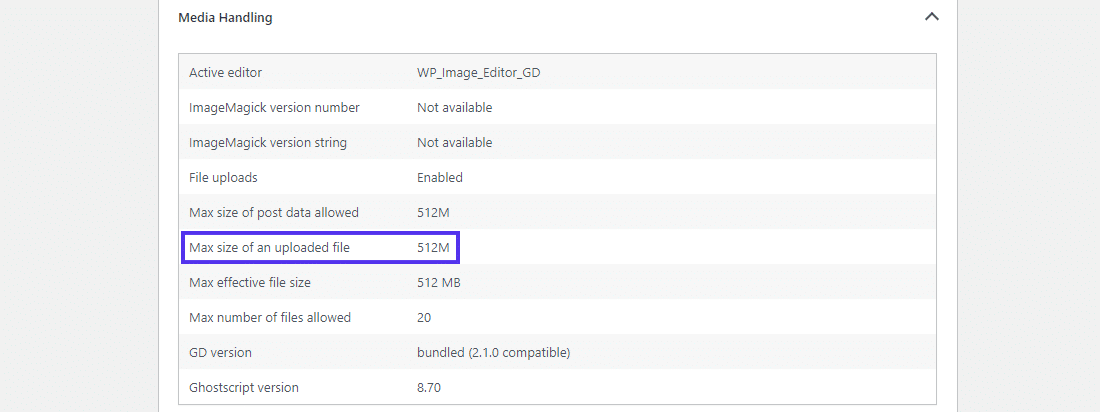
First, you can detect it listed under the Media Handling dropdown. Here, wait for the value of Max size of an uploaded file constant.
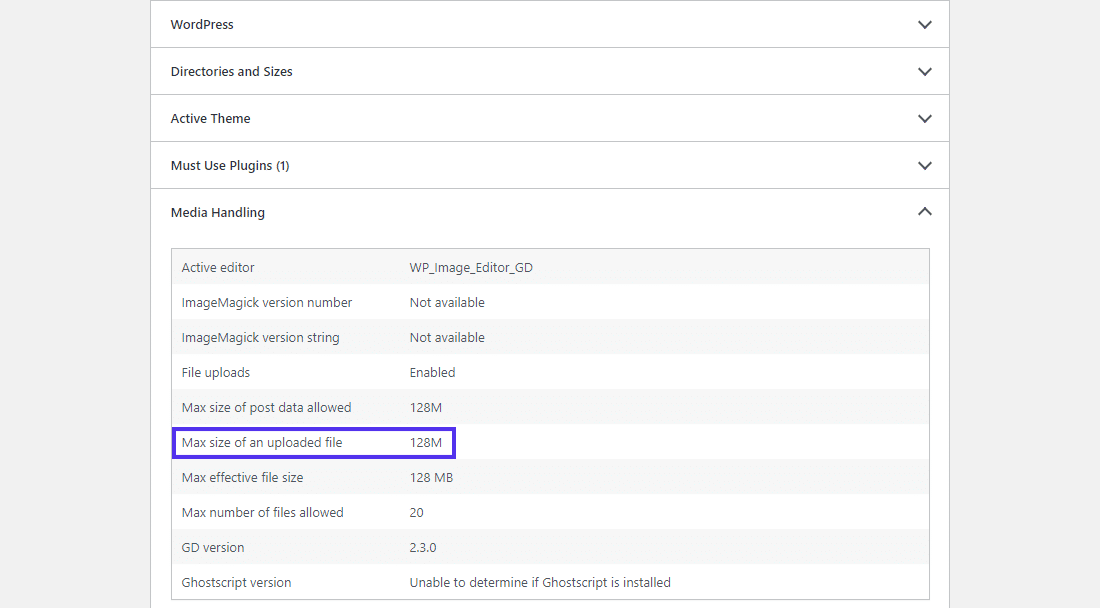
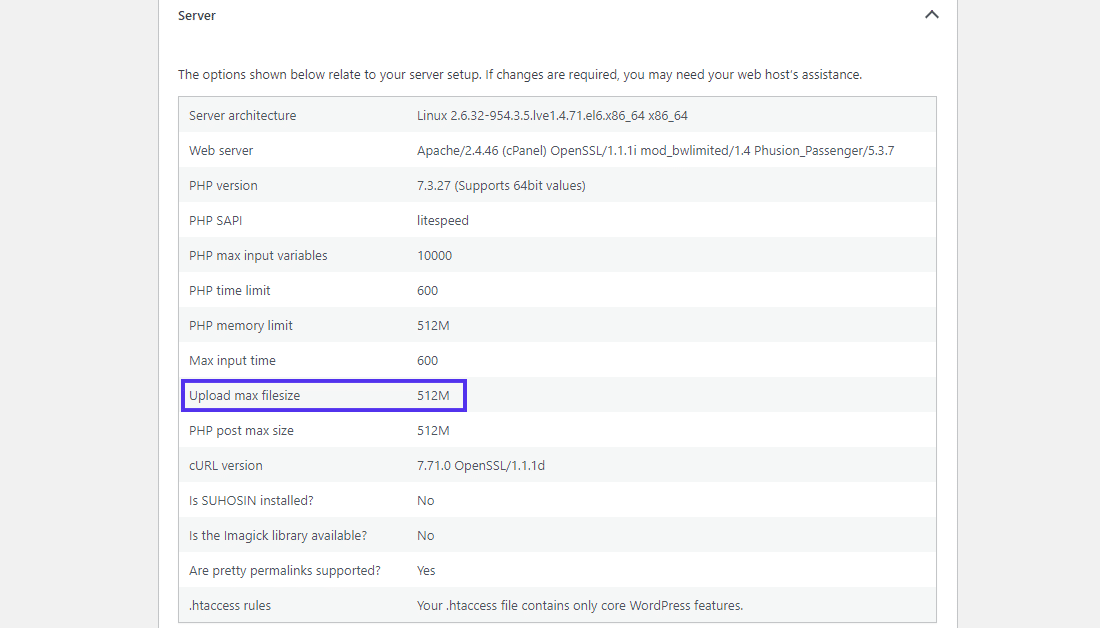
The second method is to look under the Server dropdown. You'll discover many options related to your webserver'south setup under here. Please search for the value for Upload max filesize constant to see what it is. On this site, the max upload file size limit is 128 MB.
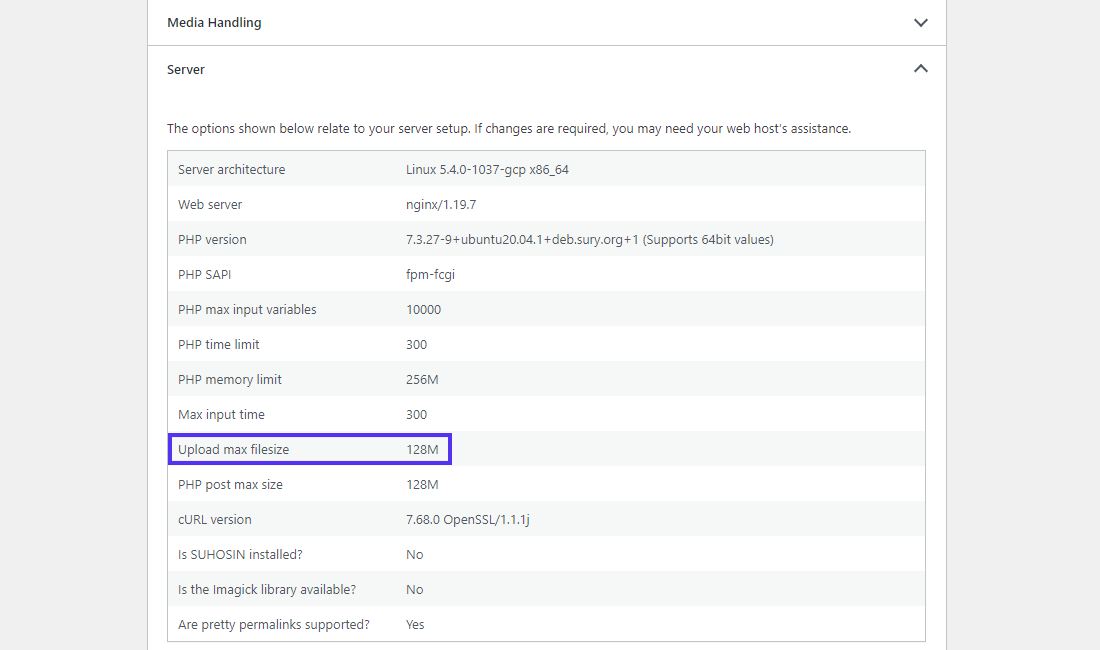
You tin besides see other PHP constants and their values, such as:
-
PHP mail max size: Defines the maximum upload limit for Mail service requests. -
PHP memory limit: Defines the memory allocated for PHP. It should be set equal to or higher than theUpload max filesizelimit. Or else the upload will fail.
Your web host sets these options. Usually, starter hosting plans will accept a lesser upload size limit than enterprise hosting plans. Some hosts may allow y'all to override these limits. But in most cases, you may need your hosting provider'due south assistance (and perhaps a plan upgrade) to increment them.
Why Increase the Maximum Upload File Size in WordPress?
At that place are many reasons why you may need to increase your WordPress site's maximum upload file size. Here are the near common ones:
- You want to install a large theme or plugin direct through the WordPress admin dashboard.
- Updating your WordPress site regularly is a great way to go on your readers engaged and return for more. And that includes uploading new images, videos, audios, and other media regularly. Notwithstanding, that's not always viable when in that location's a file size limit for your uploads.
- You lot want to upload a large video or image every bit your site's background or header.
- Yous program to sell digital files such every bit ebooks, photographs, videos, themes, and plugins directly from your site. Sometimes, these files can stitch to hundreds of megabytes (or more than).
Now that we've covered the basics of max upload file size in WordPress, let'southward learn how to increment it.
10 Ways to Increase the Max Upload File Size in WordPress
There are many ways yous tin can fix the WordPress maximum upload size effect. We'll showtime with the easiest ones kickoff, and and so we'll movement on to the intermediate-level tutorials.
Contact Your Hosting Provider for Help
If you're facing issues with uploading files and file size limits, reaching out to your hosting provider for help is one of the quickest solutions. Increasing the upload limit is a fiddling task for tech support, so most hosting companies can help you fix this issue quickly.
Tinkering with your server or site configuration files tin can ever be a claiming. Hence, nosotros always recommend you endeavour this method first.
If you lot're hosting your site with Kinsta, our knowledgeable support team is simply a click away and available 24/7. To get started, go to your MyKinsta dashboard and click the chat icon in the bottom right corner.
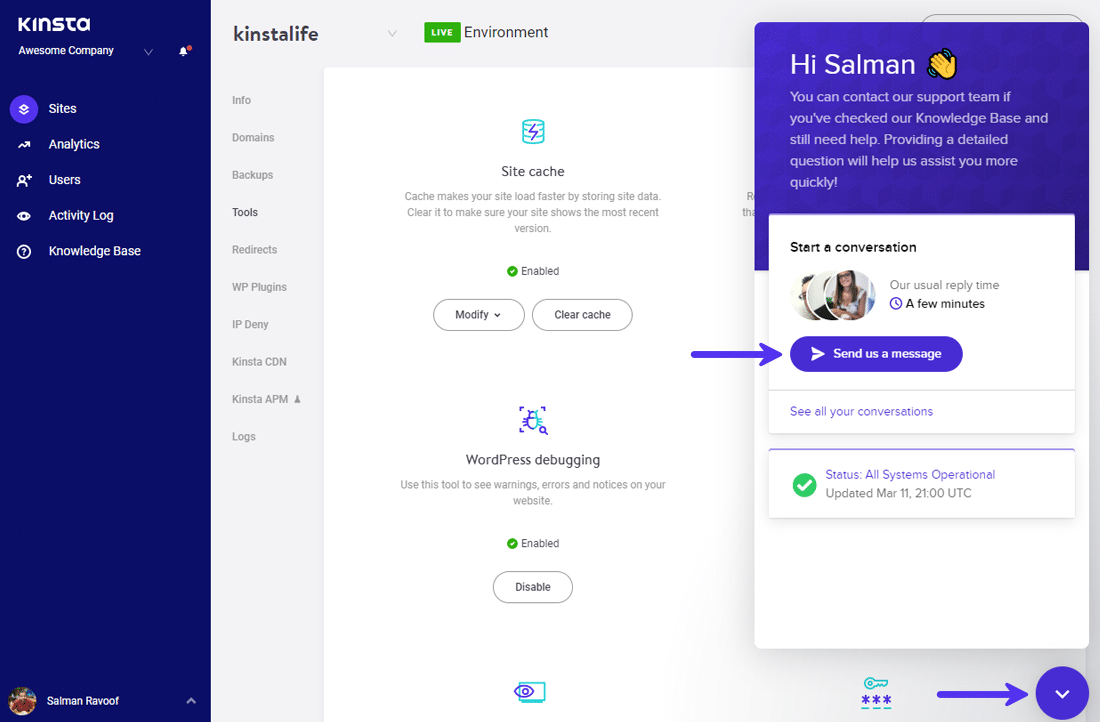
Nosotros accept representatives to assist you in many languages, including English language, Castilian, French, High german, Italian, and Portuguese.
Increase the Max Upload File Size in WordPress Multisite
If you're running a WordPress Multisite network, and so you can change the max upload file size for your network.
First, head to your Network Admin dashboard, then become to Settings > Network Settings screen. Here, scroll down till you find the Upload Settings section. You'll observe the Max upload file size field in this surface area.
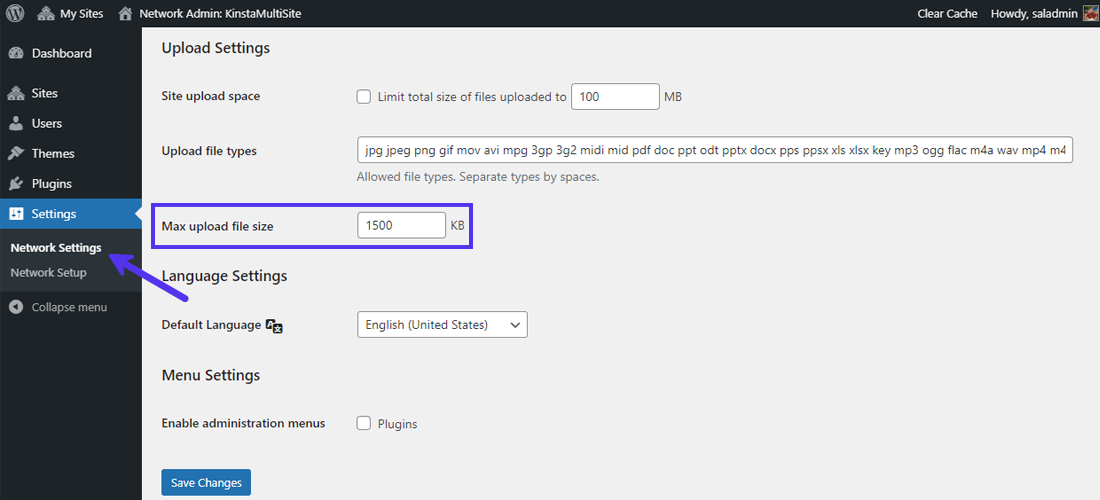
The default value of Max upload file size in a WordPress Multisite is 1500 KB (~1.5 MB). You tin change this to a higher value and click the Save Changes push button.
Note: Yous cannot circumvent the server-level max upload size limit from here. If the limit you lot set here is higher than the server's max upload size limit, the server will ignore information technology. Y'all tin can apply the methods described above to find your webserver's configuration.
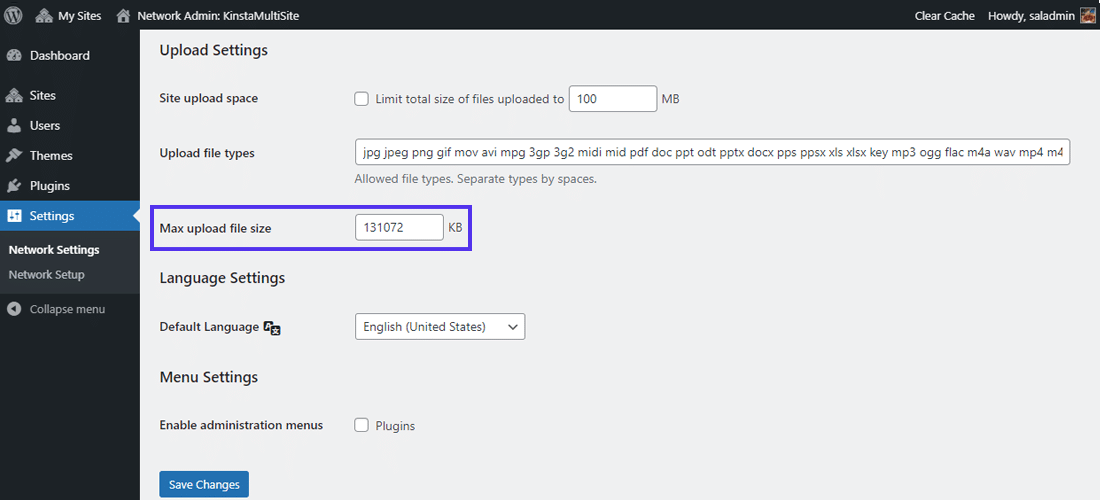
Here, we've set the new max upload file size to 131072 KB (~128 MB).
You can also limit the total size of files uploaded to an private site in the Multisite network. Nonetheless, it'south disabled by default.
Update Your '.htaccess' File
If your webserver runs on Apache, yous can update your site'due south .htaccess file to increase the max upload size in WordPress. You tin notice your .htaccess file in the WordPress site's root directory.
As per PHP documentation, three PHP directives are responsible for how WordPress handles uploads. They are:
-
upload_max_filesize -
post_max_size -
memory_limit
We've already discussed them in the Site Health Info section higher up. It would help if you modified these 3 directives' values to admit your file sizes. For example, if the largest file you're planning to upload is 32 MB, we recommend the following settings:
-
upload_max_filesize = 32M -
post_max_size = 64M -
memory_limit = 128M
Notice, all the values utilize M instead of MB. That's how PHP handles its directives.
Uploads can comprise actress information in improver to the file itself. Then, giving all other upload-related directives some animate infinite is a good thought. Yous can read our in-depth tutorial on how to amend PHP memory limit in WordPress for more information.
Access your .htaccess file via FTP/SFTP or your hosting provider'south File Manager.
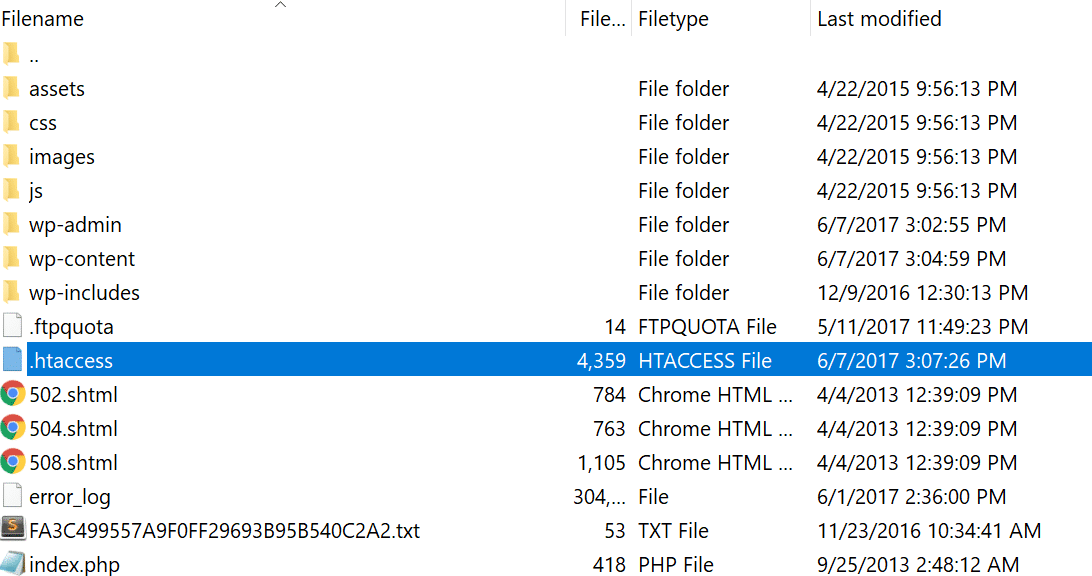
Open the.htaccess file with a text editor or code editor, and then add the post-obit lawmaking:
php_value upload_max_filesize 32M php_value post_max_size 64M php_value memory_limit 128M php_value max_execution_time 300 php_value max_input_time 300 You tin notice two other PHP directives in the in a higher place lawmaking: max_execution_time and max_input_time . They ascertain how long a server spends on a unmarried PHP job. The bigger your uploads, the bigger the time spent will be. Y'all need to set their values to a number that's appropriate for your utilize case.
Note: Y'all may go a 500 Internal Server Mistake after using the method above. Most likely, information technology'southward because your server is running PHP in CGI mode. In such cases, y'all cannot use the above commands in your .htaccess file.
Create or Alter the 'php.ini' File
The php.ini file is where y'all ascertain changes to your default PHP settings. Typically, it contains directives that define file timeouts, max upload size, and resource limits.
Using SSH or FTP, you can find the php.ini file in your WordPress root directory. In some cases, yous may not locate it at that place. Fret not! You tin create a new file with the same proper noun in your site'due south root directory.
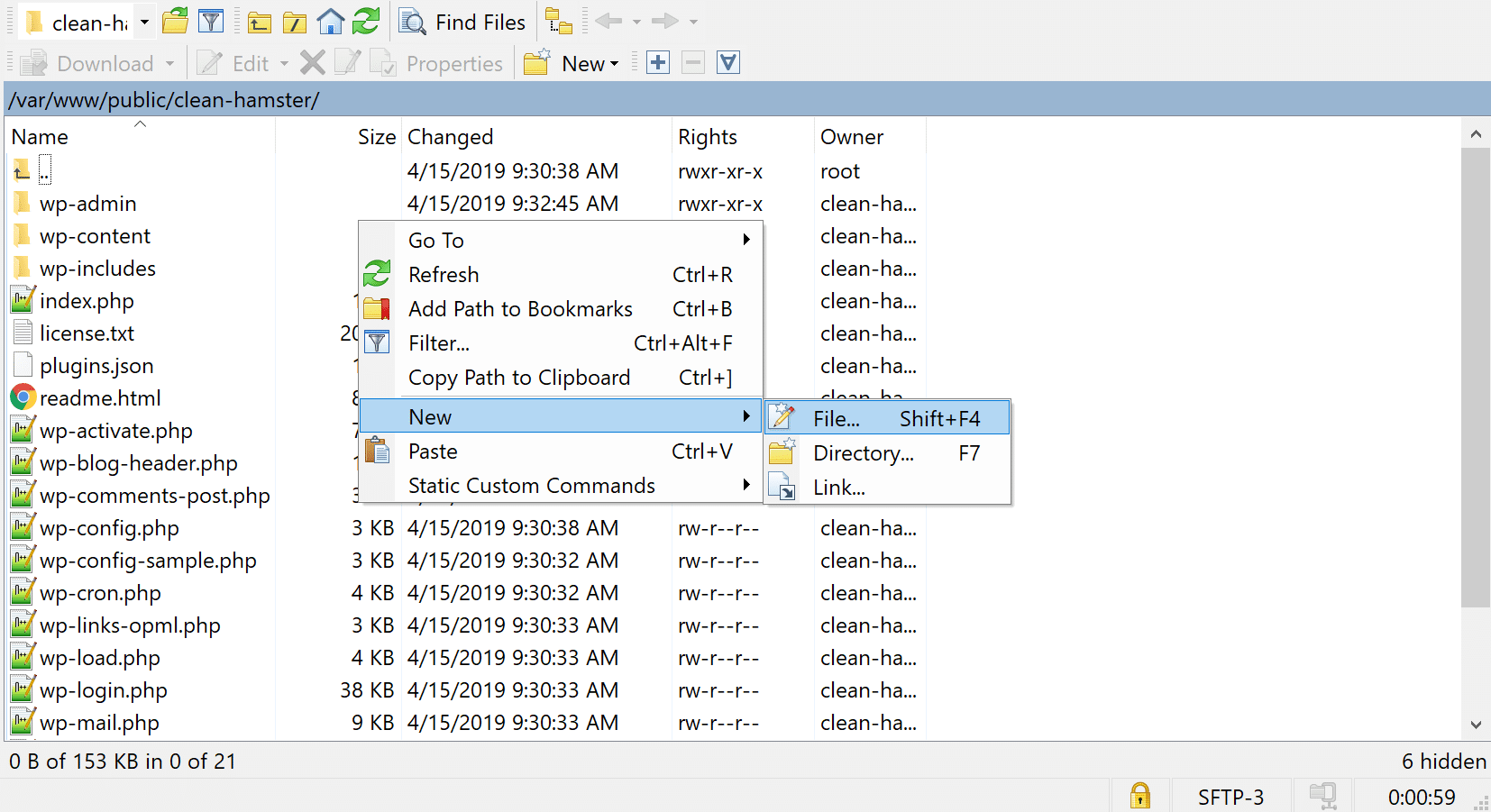
With a code or text editor, add the post-obit lawmaking to your existing or new php.ini file:
upload_max_filesize = 32M post_max_size = 64M memory_limit = 128M Don't forget to save your file after making the changes. Some hosts don't allow you lot to modify PHP settings via this method. In such a case, you can proceed to effort the following solution instead.
Subscribe Now
Create or Modify the '.user.ini' File
If your hosting provider has locked down the global PHP settings, they may have configured the server to work with .user.ini files instead of php.ini files.
Like php.ini and .htaccess files, you tin can find the .user.ini in your site's root directory. If yous can't discover it, then yous can create a new .user.ini file in the same location. Follow the same process described in the previous method to create a newphp.ini file.
Next, add the post-obit code to your .user.ini file:
upload_max_filesize = 32M post_max_size = 64M memory_limit = 128M You'll find that it'southward a repeat of the previous method, except with a unlike filename.
Modify PHP Options via cPanel
If your hosting provider uses the cPanel dashboard to help you manage your server and site configuration, you can modify the max upload file size through its interface.
To get started, get to your cPanel dashboard, and select the Select PHP Version under the Software section.
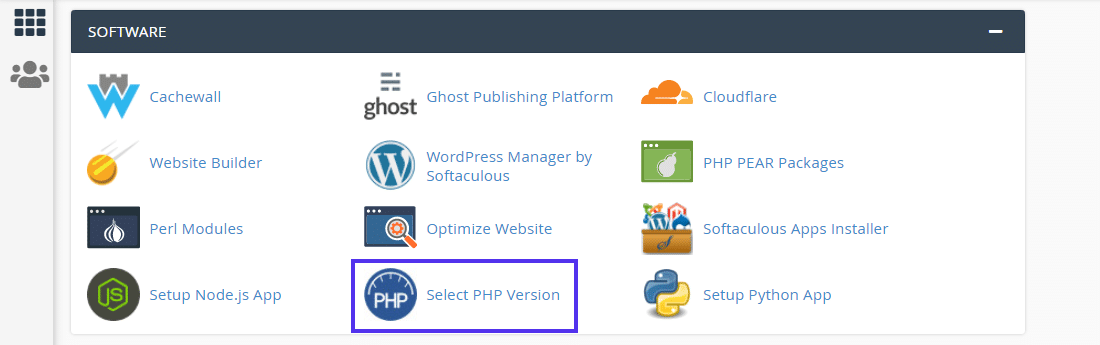
Here, you tin can alter your server'southward electric current PHP version and enable/disable many PHP extensions. Click on the Options link in the navigation menu to become to the PHP Options panel.
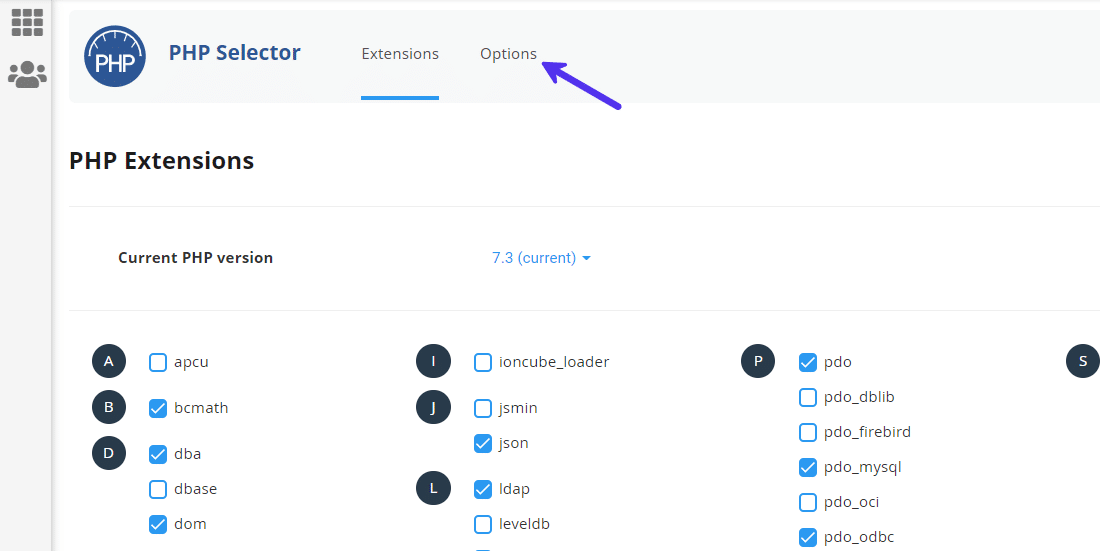
Scroll down here to modify the values of PHP directives such as upload_max_filesize , post_max_size , memory_limit , max_execution_time , and max_input_time . The max values you can prepare here depend on your current hosting programme.
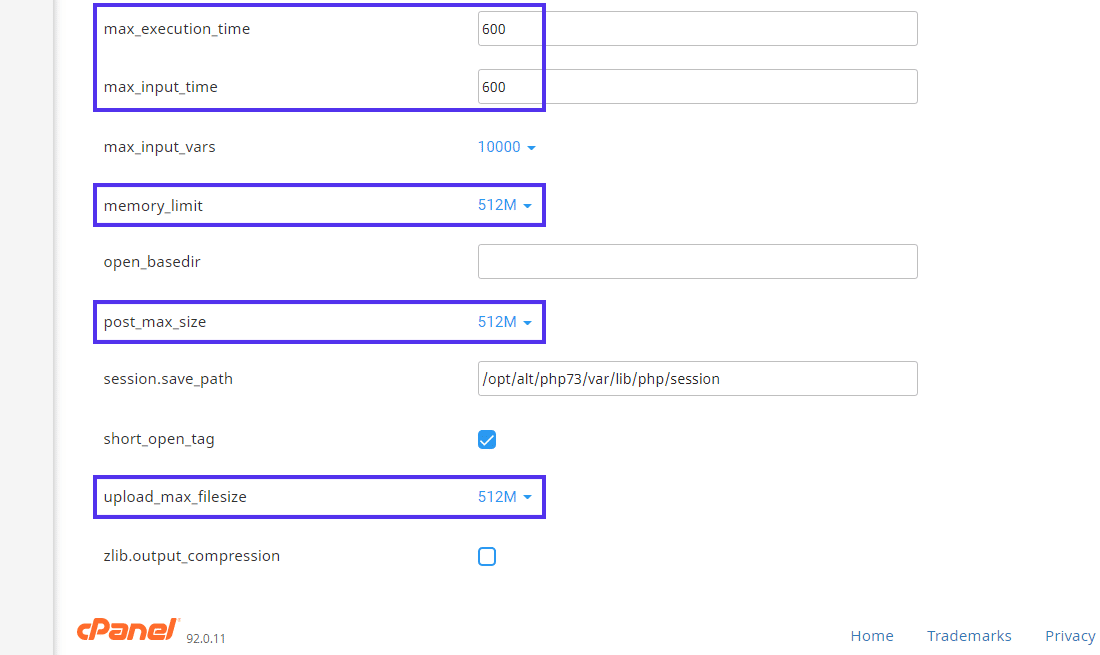
If you lot take whatsoever doubts about these values, we suggest you contact your hosting provider. The latest cPanel dashboard saves changes automatically, so y'all don't have to click anything. But if you're using an older cPanel version, make sure to click the Save Changes push.
Increase the Max Upload File Size in Nginx
Nginx is some other webserver like Apache, just it's also a lot more. Typically, Nginx can handle more concurrent requests than Apache, making information technology a lot faster. Kinsta uses Nginx to ability its operation-optimized hosting solutions for WordPress.
If you're running your WordPress site on Nginx, you'll demand to modify both your php.ini and nginx.conf files. We've dealt with the old file before. The latter ane is chosen an Nginx config file.
On an Nginx server, you tin find the php.ini file at /etc/php/seven.iv/fpm/php.ini . Depending on which PHP version you've installed, the exact path may vary slightly.
upload_max_filesize = 64M post_max_size = 128M Yous don't have to set the memory_limit in the above file as Nginx handles it differently. For more than, you can cheque out this Stack Overflow thread. After saving your php.ini file, enable the changes by restarting PHP-FPM using the below code in your terminal:
sudo service php7.iv-fpm restart Again, the exact code may vary slightly depending on the PHP version installed on your server.
Next, use Nginx'south client_max_body_size directive to set the new max upload size limit. You demand to declare this directive in the nginx.conf file, which you tin can find at /etc/nginx/nginx.conf .
You can declare this directive inside the http {...} block, the server {...} block, or the location {...} block.
Setting it in the http block will affect all the sites/apps hosted on this server.
http { ... client_max_body_size 128M; } Defining information technology in the server cake will only affect a specific site/app hosted by this server.
server { ... client_max_body_size 128M; } The location block merely affects the specified directory (e.g. files, uploads) inside a site/app.
location /files { ... client_max_body_size 128M; } Don't forget to save the file and restart Nginx to apply the changes. To do that, you can apply the following command in your terminal:
sudo service nginx reload If you're a Kinsta client, you can't admission your Nginx config directly. However, you tin can attain out to our back up squad, and they tin can quickly make the changes for you lot.
Use the WordPress 'upload_size_limit' Filter
WordPress 2.5 introduced the upload_size_limit filter, which filters the maximum upload size immune in php.ini. Even WordPress uses this filter to prove yous the max upload size allowed, similar in the Media Library and Site Health Info screens.
Below is an example of this filter in activeness from WordPress correspondent Drew Jaynes. It defines the upload size limit for all non-admin roles.
/** * Filter the upload size limit for non-administrators. * * @param string $size Upload size limit (in bytes). * @render int (peradventure) Filtered size limit. */ function filter_site_upload_size_limit( $size ) { // Set the upload size limit to 10 MB for users lacking the 'manage_options' adequacy. if ( ! current_user_can( 'manage_options' ) ) { // 10 MB. $size = 1024 * 10000; } render $size; } add_filter( 'upload_size_limit', 'filter_site_upload_size_limit', xx ); The above code uses WordPress' manage_options capability to set this limit only for non-admins. You can change the code to target specific user roles or user ids. Read our in-depth WordPress roles and capabilities article for more information.
Use a WordPress Plugin
Messing with code using SSH or FTP/SFTP is not for everyone. If you're not comfortable with writing or editing code, y'all can use a WordPress plugin instead.
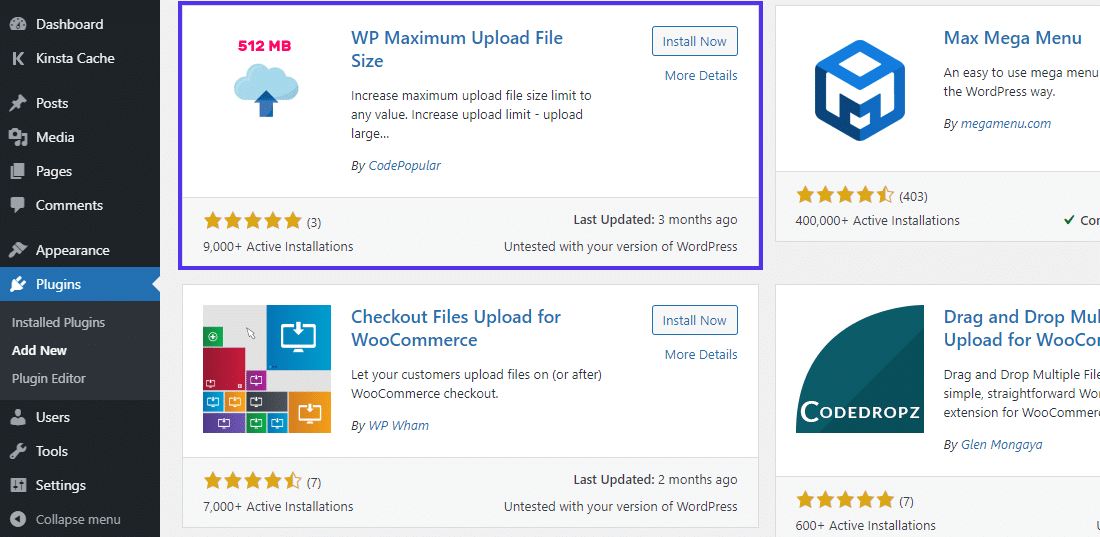
We'll be using the WP Maximum Upload File Size plugin here. As of writing this, it's the only up-to-date plugin on the WordPress plugin repository that helps yous get this done.
To get started, install and actuate the WP Maximum Upload File Size plugin. Next, become to its settings screen in your WordPress dashboard. Here, you can see the maximum upload file size set by both your hosting provider and WordPress.
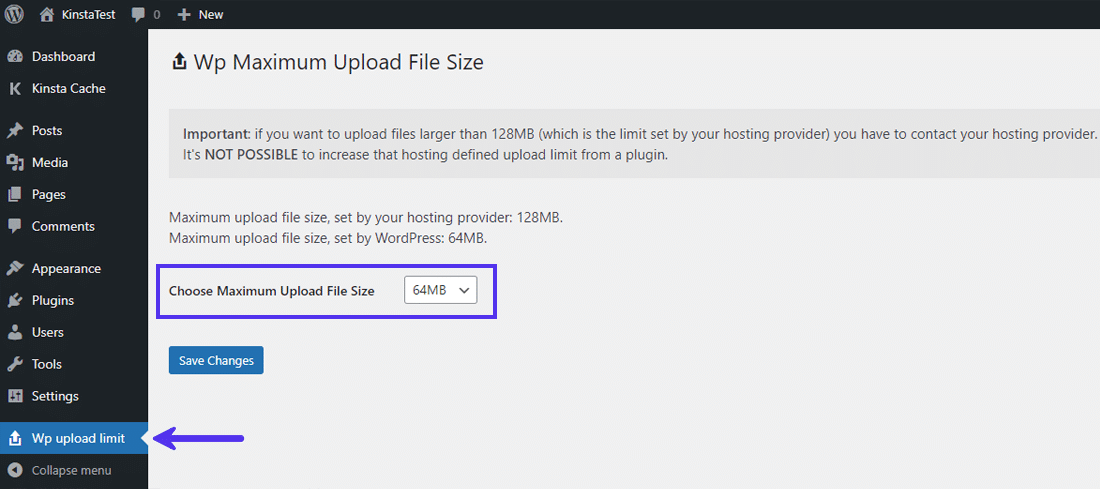
Here, yous tin can come across that the maximum upload file size gear up by WordPress is lesser than that fix by your hosting provider. Hence, you can crank it up past choosing the Maximum Upload File Size with the dropdown presented.
Note: If you lot want to set a max upload file size limit that's larger than the one set past your hosting provider, it's non possible to do information technology via this plugin. For that, you need to contact your hosting provider.
Upload Files via FTP/SFTP
Are yous yet struggling with all the above methods? Or with your hosting provider to take them raise the upload file size limit? You lot tin can always upload large files via FTP/SFTP.
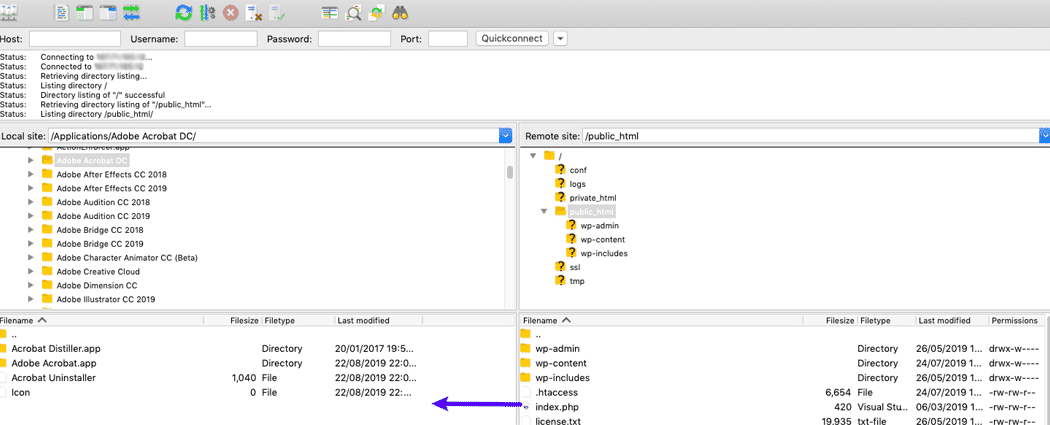
If you have a lot of large files to upload, this is the fastest method. You can read our in-depth tutorial on how to bulk upload files to the WordPress media library for more information.
Sometimes, WordPress doesn't recognize files uploaded via FTP/SFTP. If that's the case, you lot tin can employ the complimentary Add together From Server plugin to import the uploaded files into WordPress.
Alternatively, yous can exercise the same straight from the command line by importing images using WP-CLI. The wp media import command allows yous to create attachments from local files or URLs.
Don't Edit the 'wp-config.php' File
Editing the wp-config.php file doesn't piece of work anymore. We're adding it hither because we've found many web tutorials that list it as a legitimate mode to increase the max upload size in WordPress.
It involves going to your site's root directory via FTP/SFTP or SSH and so editing the wp-config.php file.
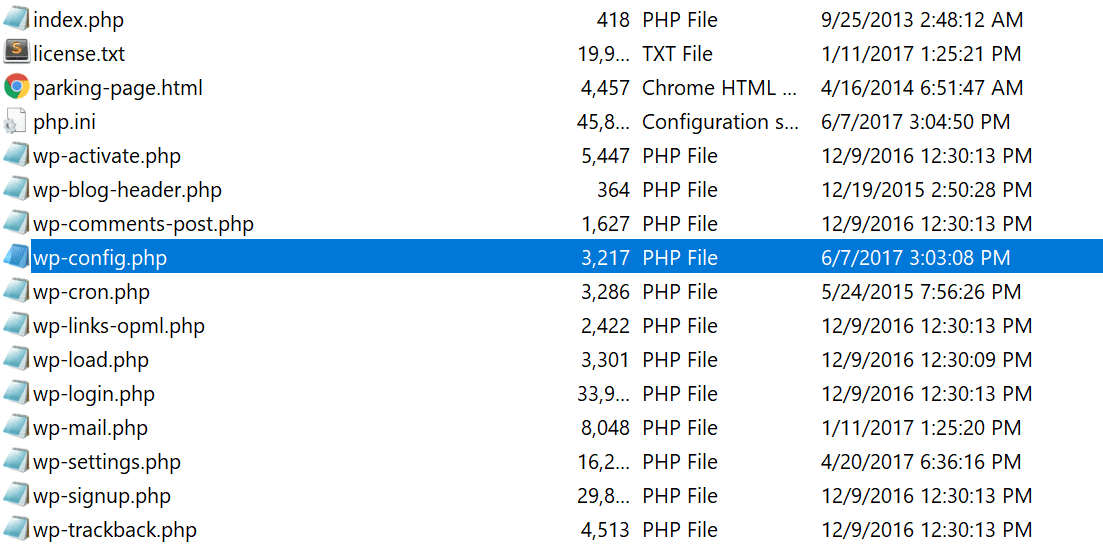
You're suggested to add the following code to the wp-config.php file:
@ini_set( 'upload_max_size' , '64M' ); @ini_set( 'post_max_size', '128M'); @ini_set( 'memory_limit', '256M' ); It fails to work because you can only use the ini_set() function to set PHP directives that belong to the PHP_INI_ALL child-bearing mode.
As upload_max_size and post_max_size belong to the PHP_INI_PERDIR child-bearing manner. You tin can simply ready them via php.ini, .htaccess, http.conf, or .user.ini.
If you've tried this method before without seeing whatever results, now you lot know why it fails.
Verify Your WordPress Site's New Max Upload File Size
Finally, information technology's time to verify whether the new max upload file size limit is implemented in your WordPress site. To practise this, follow the same procedure we discussed to a higher place to check the max upload file size in WordPress.
Go to your Media Library in the WordPress dashboard and check whether the max upload file size limit has changed.
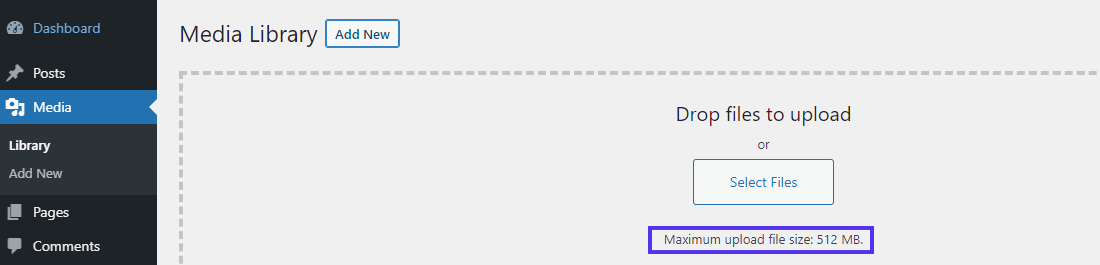
Yep, it has inverse. That's a success!
You lot tin can also get to the Site Health Info panel and check for the aforementioned under Media Handling and Server dropdowns.
Summary
Every bit you lot've seen, increasing the maximum upload file size in WordPress isn't too circuitous. Whether y'all're building a media-heavy portfolio site or installing a big theme, it's just a matter of knowing where to expect for and what commands or tools to utilize.
In most cases, reaching out to your hosting provider should be enough. Withal, if you lot're stuck with a troublesome host, nosotros've shown you lot some culling methods you can endeavour before migrating to better hosting.
Go uploading!
Did we embrace it all? If you've experienced a stubborn example of upload file size limits, let us know how y'all managed to fix it.
Relieve time, costs and maximize site performance with:
- Instant help from WordPress hosting experts, 24/7.
- Cloudflare Enterprise integration.
- Global audience reach with 29 information centers worldwide.
- Optimization with our built-in Application Performance Monitoring.
All of that and much more, in one programme with no long-term contracts, assisted migrations, and a thirty-day-money-back-guarantee. Bank check out our plans or talk to sales to find the plan that's right for you lot.
Source: https://kinsta.com/blog/increase-max-upload-size-wordpress/
0 Response to "Exceeds the Maximum Upload Size for This Site Godaddy Wordpress"
Post a Comment